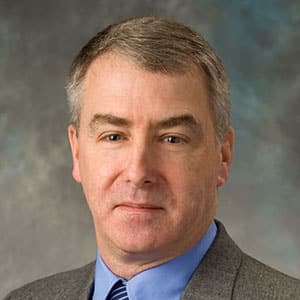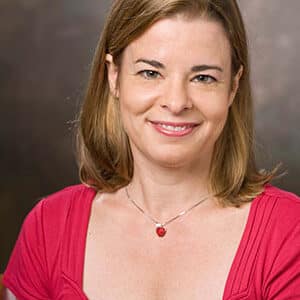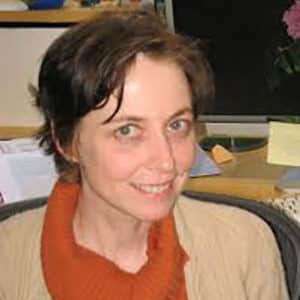
Gerald A. Berkowitz
Gerald A. Berkowitz
Professor Of Horticulture, UConn College Of Agriculture, Health, And Natural Resources
Elected to the Academy in 2025

Education

Cornell University, Agronomy, 1977, BS, Agronomy; Texas Tech University, 1979, MS, Plant Science; Brandeis University, 1983, PhD, Photobiology

Professional Areas

Identification of genes encoding plant cell receptors and downstream activation of gene expression leading to pathogen resistance. Also identified genes encoding trichome morphogenesis transcription factors that underlie cannabinoid production in cannabis plants.

Citation

Internationally recognized for identifying plant cell molecular signaling pathways allowing for perception of non-self and defense against pathogen infection. Also pioneered scholarly study of cannabis and developed the first cannabis horticulture courses at a U.S. university and development of research to understand plant molecular biology related to cannabinoid production.

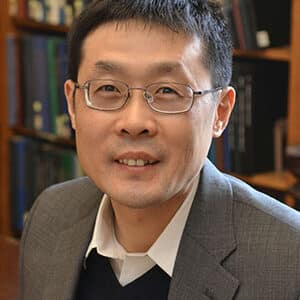
Chyrell D. Bellamy
Chyrell D. Bellamy
Professor Of Psychiatry, Yale School Of Medicine; Director, Yale Program For Recovery And Community Health
Elected to the Academy in 2025

Education

Rutgers University, 1990, BA, Psychology; 1993, MSW, Interpersonal Practice/Administration In Health Care Settings; University Of Michigan, 2005, PhD, Social Work & Social Psychology

Professional Areas

Leadership in health policy, social work, mental health, recovery, underserved populations, bridging clinic and community, addiction, and reducing stigma.

Citation

For innovative work, such as the Imani Breakthrough Project, in reducing healthcare disparities and improving outcomes for individuals with mental illness and multiple chronic health conditions in Connecticut and the U.S., through the lens of sociocultural pathways to recovery and healing.

Harrison H. Zhou
Harrison H. Zhou
Henry Ford II Professor of Statistics and Data Science, Yale School of Medicine
Elected to the Academy in 2024

Education

Central China Normal University, 1995, BS, Mathematics; Cornell University, 2004, PhD, Mathematics

Professional Area(s)

Large covariance matrices estimation, Statistical network analysis, Le Cam theory, Bayesian nonparametrics, Analysis of iterative algorithms including K-means, EM and Variational Bayes, Spectral analysis, Wavelet estimation

Citation

For fundamental and impactful contributions to modern statistical decision theory in large covariance matrices estimation, statistical network analysis, and nonparametrics estimation; for dedication and passion for teaching, mentoring, and professional service; and for outstanding leadership in statistics and data science.

Xiaoyong Yang
Xiaoyong Yang
Professor in Comparative Medicine, Yale School of Medicine
Elected to the Academy in 2024

Education

Nankai University (China), 1993, BS, Microbiology; Peking University (China), 1996, MS, Cell Biology; University of Alabama at Birmingham, 2001, PhD, Cell Biology

Professional Area(s)

Biochemistry, molecular biology, cell biology, and metabolic physiology; research directed at understanding signaling mechanisms governing metabolism in response to environmental and genetic cues, and to design strategies to battle metabolic disease and cancer

Citation

For seminal contributions to our understanding of the molecular intricacies of diabetes and obesity, through pioneering research on the roles of protein posttranslational modifications in cell signaling and metabolic physiology.

Eric P. Winer
Eric P. Winer
Alfred Gilman Professor of Pharmacology and Professor of Medicine (Medical Oncology); Director, Yale Cancer Center
Elected to the Academy in 2024

Education

Yale University, 1978, BA, History; Yale School of Medicine, 1983, MD

Professional Area(s)

Medical oncology, clinical trials research, cancer research administration

Citation

For seminal, internationally recognized clinical research contributions that led to improved treatment of breast cancer and for major administrative accomplishments as Director of the Yale Cancer Center and President of the American Society for Clinical Oncology. Noted for his commitment to bringing outstanding cancer care to all.

Amit Surana
Amit Surana
Principal Technical Fellow, RTX Technology Research Center
Elected to the Academy in 2024

Education

Indian Institute of Technology (Bombay), 2000, BTech, Mechanical Engineering; Pennsylvania State University, 2002, MS, Mechanical Engineering; 2003, MA, Mathematics; Massachusetts Institute of Technology, 2007, PhD, Mechanical Engineering

Professional Area(s)

Dynamical Systems, Operator Theoretic Techniques, Reduced Order Modeling, Estimation and Control; Uncertainty Quantification, Machine Learning, Multi-agent Control and Coordination, Human Supervisory Control; Unmanned Systems; Prognostics and Health Management; Automated Inspection; Advanced Manufacturing Monitoring and Control; Guidance, Navigation and Control; Quantum Computing; Fluid Flow Mixing and Separation

Citation

For outstanding contributions to the theory and practice of interdisciplinary research spanning the fields of dynamical systems, control theory, uncertainty quantification, machine learning, and human-robot collaboration with a broad range of applications in aerospace and defense.

Kevin N. Sheth
Kevin N. Sheth
Professor of Neurology & Neurosurgery; Executive Director of the NNCTU and Vice Chair for Clinical and Translational Research in the Departments of Neurology and Neurosurgery; Director, Yale Center for Brain and Mind Health; Division Chief, Neurocritical Care and Emergency Neurology, Yale School of Medicine
Elected to the Academy in 2024

Education

Johns Hopkins University, 1999, BA, Neuroscience; University of Pennsylvania, 2003, MD

Professional Area(s)

Neurocritical care and vascular neurology; intensive care approaches to brain injury like stroke and brain hemorrhage; interdisciplinary research yielded groundbreaking approaches to treatment, to related technology and to phase III clinical trials

Citation

Internationally acclaimed investigator in brain health science; pioneered the first-in-human trials to mitigate brain swelling after a stroke and for secondary prevention of brain hemorrhage in survivors; led the scientific deployment of the world’s first portable MRI system for use in brain injury; holder of patents in real-time stroke detection and in stroke nanoparticle technology.

Wayde R. Schmidt
Wayde R. Schmidt
Vice President of Applied Research, Ambri, Inc.
Elected to the Academy in 2024

Education

Rensselaer Polytechnic Institute, 1982, BS, Chemistry; 1985, MS, Chemistry; 1987, PhD, Physical-Analytical Chemistry; 1999, MBA, Management of Technology

Professional Area(s)

Materials Chemistry; Additive & Layered Manufacturing; Printed Electronics & Direct Write; High-Temperature Materials (e.g., Hypersonics); Glass & Ceramic Matrix Composites; Microfabrication Techniques; Preceramic & Inorganic Polymers (Polymer-Derived Ceramics); Advanced Ceramics; Cellular Porous Solids; Engineered Surfaces & Coatings; Hybrid Material Systems & Processes

Citation

For outstanding technical contributions in the areas of materials chemistry, additive manufacturing, polymer-derived ceramics, advanced coatings, and ceramic matrix composites for commercial and military applications, enabling the development and deployment of aerostructures with enhanced performance and environmental stability under extreme conditions (>1500C), resulting in 144 US and >75 international patents.

Valerie Reinke
Valerie Reinke
Professor of Genetics, Yale School of Medicine
Elected to the Academy in 2024

Education

University of Illinois, Champaign-Urbana, 1990, BS, Genetics; University of Texas Health Science Center, 1996, PhD, Biomedical Sciences

Professional Area(s)

Genomics; led national consortia to build a community resource of regulatory elements encoded in the genomes of C. elegans and Drosophila; demonstrated positive, energetic

Citation

Pioneered use of microarray technology in genomic analysis; advanced genomic technologies to discover novel and fundamental gene regulatory mechanisms that direct germ cell function, organization, and development in C. elegans. Her laboratory has discovered the myriad of mechanisms by which transcription factors and genome organization and composition influence complex, large-scale tissue-specific regulatory programs.

Karin M. Reinisch
Karin M. Reinisch
David W. Wallace Professor of Cell Biology and Molecular Biophysics and Biochemistry, Yale School of Medicine
Elected to the Academy in 2024

Education

Harvard College, 1989, BA, chemistry; Harvard University, 1995, PhD, Chemistry

Professional Area(s)

Biochemistry and structural cell biology

Citation

For a central role in the discovery and mechanistic investigation of proteins that mediate lipid traffic between intracellular membranes to ensure membrane homeostasis and integrity and to promote organelle biogenesis.