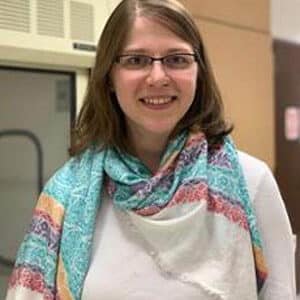

Megan L. Ranney
Megan L. Ranney
Dean, C.-E.A. Winslow Professor of Public Health (Health Policy) and Professor of Emergency Medicine, Yale School of Public Health
Elected to the Academy in 2024

Education

Harvard College, 1997, History of Science; Columbia University College of Physicians and Surgeons, 2004, MD; Brown University, 2010, MPH

Professional Area(s)

Developing, testing, and disseminating digital health interventions to prevent violence and related behavioral health problems, as well as on COVID-related risk reduction

Citation

For recognition as a national public health leader and communicator who has brought deeper understanding of public health challenges and who has changed public health paradigms through technology-based interventions to reduce violence (particularly firearm injury), mental illness, substance use, and infectious disease risk.

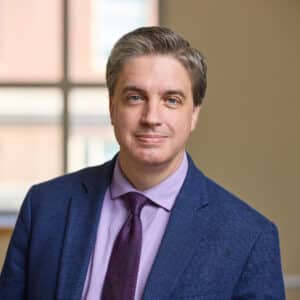
Ravi Rajamani
Ravi Rajamani
President, Independent Data Consortium for Aviation
Elected to the Academy in 2024

Education

Indian Institute of Technology (Delhi), 1983, BTech, Mechanical Engineering; Indian Institute of Science, (Bangalore), 1986, MS, Automation and Computer Science; University of Minnesota, 1990, PhD, Electrical Engineering; UConn, 2003, MBA

Professional Area(s)

Control theory and practice with a focus on diagnostics and prognostics of complex engineering systems; aircraft systems with special emphasis on propulsion; electric and hybrid propulsion, including electrical components and battery systems; systems engineering and model-based design and analytics; aerospace standards for next-generation aircraft and for system certification

Citation

For pioneering contributions to the theory and practice of data analytics and prognostics & health management of aerospace systems, resulting in several books, papers, and 28 patents. For providing industry leadership in developing aerospace standards and for creating and leading a global data consortium to develop data-sharing governance policies.

Christopher Pittenger
Elizabeth Mears and House Jameson Professor, Deputy Chair for Translational Research, Director, Clinical Neuroscience Research Unit, Director, Yale Program for Psychedelic Science, Co-Director, Yale Center for Mind, Brain and Behavior, Yale School of Medicine
Elected to the Academy in 2024

Education

Yale University, 1994, BS, Molecular Biophysics and Biochemistry; 1994, MS, Molecular Biophysics and Biochemistry; Columbia University, 1999, MPhil, Neurobiology and Behavior; 2002, PhD, Neurobiology and Behavior; 2003, MD

Professional Area(s)

Understanding, treating, and developing medications in neuropsychiatric disorders; Neuroscience/Psychiatry Education: leads the Neuroscience Research Training Program in Psychiatry

Citation

A translational neuroscience pioneer and Connecticut’s leading expert on the neurobiology and treatment of obsessive-compulsive disorder and Tourette’s disorder. Co-leadership of the Yale Center for Brain and Mind Health, and leadership of the Yale Center for Psychedelic Science, the Clinical Neuroscience Research Unit, and the NIMH Neuroscience Research Training Program attest to his broad impact.

David M. Pierce
David M. Pierce
Professor, Biomedical Engineering Department, UConn College of Engineering
Elected to the Academy in 2024

Education

University of Minnesota, 1997, BS, Mechanical Engineering; Stanford University, 2001, MS, Mechanical Engineering; 2007, PhD, Minor Mathematics; 2007, PhD, Mechanical Engineering

Professional Area(s)

Soft-tissue mechanics, computational mechanics, theory of finite element analysis, solid mechanics, theory of porous media, continuum mechanics, constitutive modeling, fracture and fatigue analysis, computer programming

Citation

Aims to understand and predict the mechanics of soft tissues and engineering materials; current research employs theoretical, computational, and experimental tools to explore the interplay of form and function in cartilage, specifically the multiscale and multi-phase mechanics and how these evolve in health, damage, and disease.

Wolfgang Peti
Wolfgang Peti
Professor, Department of Biology and Biophysics, UConn Health
Elected to the Academy in 2024

Education

University of Vienna, 1998, Diploma Magister, Chemistry; University of Frankfurt, 2001, PhD, Chemistry

Professional Area(s)

Molecular analysis of complex signaling events; Protein Phosphatases and Kinases in eukaryotic signaling; substrate specificity for protein phosphatases; structural biology; NMR, X-ray; cryo-EM; bacterial antibiotic resistance; penicillin-binding proteins, X-ray crystallography based screening and small molecule drug design

Citation

For seminal contributions to the analysis of mechanisms of enzyme function, including the high specificity of Ser/Thr protein phosphatases via complex formation with regulatory proteins, how SerThr protein kinases’ activity is modulated by protein dynamics, and new insight into drug resistance of bacterial penicillin-binding proteins.

Rebecca Page
Rebecca Page
Professor, Department of Cell Biology, UConn Health
Elected to the Academy in 2024

Education

University of Arizona 1993, BA, Biochemistry; 1993, BS, Applied Mathematics; Princeton University, 1999, PhD, Chemistry

Professional Area(s)

Structural biology and biophysics, cell biology, genetics and biochemistry, signal transduction in prokaryotes and eukaryotes and phosphoprotein phosphatases

Citation

For seminal contributions to our understanding of the molecular and structural basis for serine/threonine phosphatase activity and specificity in human cells and the mechanisms by which toxin-antitoxin systems and penicillin binding proteins drive antibiotic resistance in bacteria.

Lucila Ohno-Machado
Lucila Ohno-Machado
Waldemar von Zedtwitz Professor of Medicine and Biomedical Informatics and Data Science; Deputy Dean for Biomedical Informatics; Chair, Section of Biomedical Informatics and Data Science, Yale School of Medicine
Elected to the Academy in 2024

Education

University of São Paulo (Brazil), 1989, MD; Escola de Administração de São Paulo (Brazil), 1991, MBA; Stanford University, 1996, PhD, Medical Information Sciences and Computer Science

Professional Area(s)

Biomedical informatics research; innovative approaches at the intersection of engineering, technology, and medicine to address inequality in health care and research; building new algorithms and tools; leadership at the nexus of artificial intelligence in medicine

Citation

Enabling broader sharing of clinical data and creating algorithms that allow sharing access to clinical data while respecting the privacy of individuals and institutions. Creating new biomedical informatics academic units at public and private institutions and developing tailored curricula and new training programs.

Sarah E. Maurer
Sarah E. Maurer
Professor and Associate Dean, Central Connecticut State University
Elected to the Academy in 2024

Education

Indiana University of Pennsylvania, 2004, BS, Biochemistry; University of California, Santa Cruz, 2010, PhD, Chemistry and Biochemistry

Professional Area(s)

Combinatorial chemistry and modeling in Astrobiology; liposome synthesis and characterization; analysis of complex chemical mixtures; Realistic prebiotic chemistry; understanding the origins of life using non-biological cell membranes

Citation

For world-renowned contributions to the field of abiogenesis within the origin of life research. Pioneered the use of combinatorial chemistry, advanced analytical tools, and machine learning to study molecular self-assembly under early Earth conditions. For being internationally recognized for scientific breakthroughs that proved the self-assembly of simple amphiphilic molecules to membrane like structures capable of cellular life on early Earth.

Yi Li
Yi Li
Professor, Department of Plant Science and Landscape Architecture, UConn
Elected to the Academy in 2024

Education

Beijing Forestry College (now Beijing Forestry University), 1982, BS, Forestry; State University of New York (Syracuse), 1989, PhD, Plant Physiology & Biochemistry

Professional Area(s)

Plant hormone biology, horticultural plant biotechnology, and breeding

Citation

Internationally recognized for elucidating a key precursor in ABA biosynthesis, pioneering in-situ auxin molecular assays, and developing numerous well-known plant biotechnologies. Breeding of non-invasive burning bush, a $40-70 million/year crop, and “climate-smart, low-maintenance” lawn grasses requiring only three annual mowings in Connecticut, eliminating the need for fertilizer applications.

Mark A. Lemmon
Mark A. Lemmon
Alfred Gilman Professor of Pharmacology, Yale School of Medicine
Elected to the Academy in 2024

Education

University of Oxford, Hertford College, 1988, BA, Biochemistry; Yale University, 1990, MPhil, Molecular Biophysics & Biochemistry; 1993, PhD, Molecular Biophysics & Biochemistry

Professional Area(s)

Molecular mechanism and recognition in cell signaling; use of structural biology, biochemical and biophysical approaches to elucidate the molecular regulatory principles of how receptor tyrosine kinases signal; laboratory determined the first crystal structure of the inactive state of EGFR’s extracellular region and used biophysical and biochemical tools to understand allosteric EGFR regulation by growth factors and its alteration by cancer mutations

Citation

Elucidated molecular mechanisms governing key cellular signaling processes and showed how epidermal growth factor receptor is allosterically regulated by different growth factors and mutations to direct distinct signals. Seminal contributions also revealed how modular protein domains recognize membrane components to organize signaling pathways.